Why More Users Are Choosing Remote-Controlled Crawler Lawn Mowers:
Why More Users Are Choosing Remote-Controlled Crawler Lawn Mowers:
The True Value of Lawn Mower Remote Control Explained
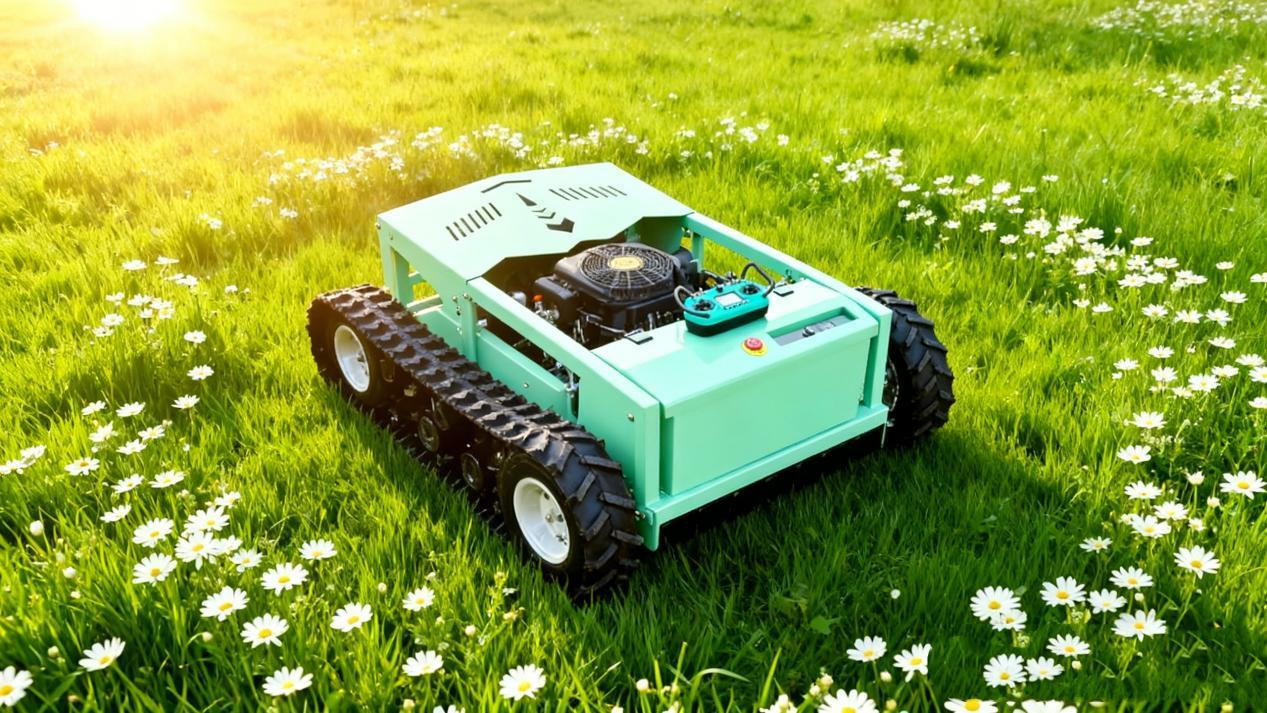
In lawn maintenance, orchard weed removal, agricultural land clearing, and slope mowing, the lawn mower has long been an indispensable tool. But as working environments become more complex and safety expectations rise, the remote control lawn mower—especially the remote control crawler lawn mower and tracked lawn mower—is rapidly becoming the top choice for homeowners, farmers, contractors, and landscaping professionals.
These machines offer powerful engines, exceptional terrain capability, and intelligent remote operation, creating a mowing experience that is safer, easier, and dramatically more efficient.
Yet many still wonder:
“If a lawn mower can already run on its own, why do we still need remote control?”
“What makes a remote-controlled lawn mower superior to traditional equipment?”
Today, we will break down the true value of remote control technology and explain why a remote-controlled lawn mower is transforming modern landscaping.
1. Safety First: Turning High-Risk Mowing into a Safe, Remote Operation
- Traditional lawn mowers require the operator to stay close to the machine, exposing them to:
- Flying stones, metal debris, and branches
- Blade kickback or breakage
- Machine rollovers
- Slippery slopes or potholes
- Hazardous working environments
A remote control lawn mower robot eliminates these risks.
With a lawn mower remote, operators can stand hundreds of meters away, safely outside the danger zone. This prevents direct contact with:
- High-speed blades
- Rotating cutters
- Steep slopes
- Muddy or unstable terrain
- Flying debris
Many high-grade models—including heavy duty remote control lawn mowers, diesel robot lawn mower, and electric remote control lawn mower—include:
- One-button emergency stop
- Signal encryption to avoid interference
- Auto obstacle detection
- Slope stability systems
This transforms mowing from “high-risk outdoor labor” into “safe remote operation.”
2. Lower Labor Intensity and Much Higher Efficiency
Traditional mowing requires:
- Pushing heavy equipment
- Constant turning and repositioning
- Maintaining balance on slopes
- Physical endurance in hot weather
A remote lawn mower removes all of this effort:
- Stand and mow—no bending or pushing
- Plan mowing paths with a controller
- Cover wide areas with minimal effort
- Perfect for elderly users, women, and people with limited strength
- Easily reach edges, corners, orchards, and complex terrain
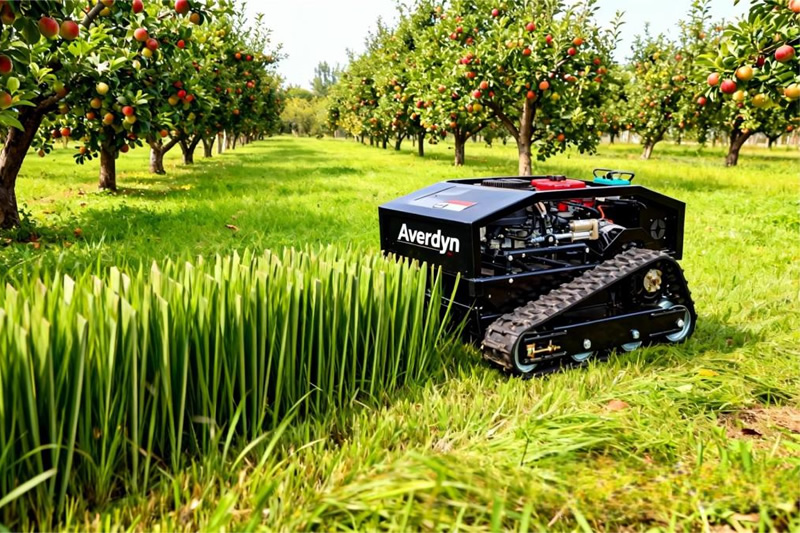
For farms, orchards, and hillsides, tracked lawn mowers and all terrain lawn mowers improve efficiency by 5–10×, dramatically reducing labor cost and fatigue.
3. Solving the “Impossible Tasks” of Traditional Lawn Mowers
Many environments are extremely difficult for manual or ride-on mowers:
- Irregular terrain
- Steep slopes and embankments
- Dense orchards with roots and bushes
- Wet or muddy ground
- Industrial zones where people should not enter
A remote-controlled robot lawn mower handles these situations with ease:
- Drives precisely along straight or curved paths
- Remote micro-adjustments enable high-precision mowing
- No human entry required in hazardous areas
- Elderly or physically limited users can operate easily
- Works where traditional mowers simply cannot go
Whether it's a remote control slope lawn mower for hillsides or a radio controlled lawn mower for large estates, remote mowing eliminates blind spots and greatly expands usable working conditions.
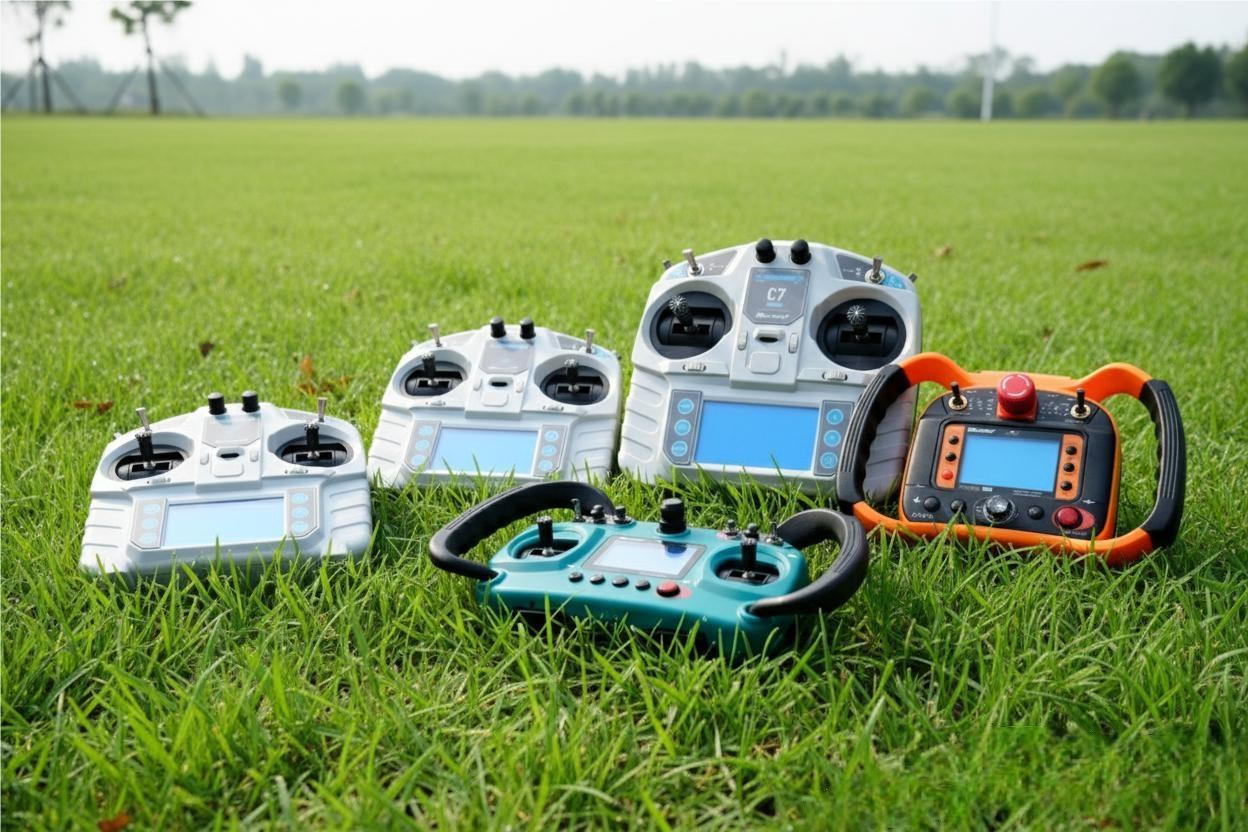
4. How to Choose a Professional Remote Controller for Your Remote-Controlled Lawn Mower
A high-quality crawler lawn mower or remote control lawn mower crawler type requires a reliable industrial-grade controller. Here are 5 essential factors:
1. Outdoor Durability (Environment Adaptability)
Your controller must handle:
- Dust
- Water and rain
- Mud
- Drops and vibrations
- High/low temperatures
This is critical for all terrain lawn mowers used in fields, orchards, slopes, and wetlands.
2. Control Functions
Choose a controller based on how many functions your mower needs:
- Forward / reverse
- Left / right steering
- Blade lifting
- Cutting height adjustment
- Speed control
- Snow plow control (for remote control lawn mower and snow plow electric)
The more precise the control, the more efficient the mowing.
3. Signal Performance: Range & Anti-Interference
A strong remote system should offer:
- Sufficient control distance
- Stable communication through obstacles
- Anti-interference technology
- Safe encrypted signals
This ensures your remote lawn mower heavy duty model never loses connection during tough jobs.
4. Battery Life & Charging System
Look for:
- High-performance lithium batteries
- Long standby and operation time
- Fast charging capability
- Easy battery replacement
This is especially important for commercial and heavy duty remote control lawn mowers.
5. Brand Reliability & Technical Support
Choose a manufacturer with:
- Strong R&D capability
- Patented remote control technologies
- Customization services
- Solid after-sales support
- Experience supplying made in China lawn mowers and industrial control systems
A reliable brand ensures long-term stability and professional performance.
Conclusion: Remote-Controlled Crawler Lawn Mowers Are the Future of Outdoor Maintenance
Whether you’re maintaining a lawn, orchard, slope, or agricultural land, a remote-controlled lawn mower offers unmatched advantages:
- Much higher safety
- Lower physical workload
- Extreme efficiency improvement
- Ability to handle all terrains
- Perfect for home, farm, orchard, hillside, and commercial applications
This is not just a tool upgrade—
It is a complete revolution in lawn care and vegetation management.